
In today’s competitive B2B landscape, Account-Based Marketing has emerged as one of the most powerful strategies for companies looking to maximize revenue from high-value accounts. Rather than casting a wide net, this approach focuses resources on carefully selected target accounts, delivering personalized experiences that resonate deeply with decision-makers. Understanding how to implement it effectively can be the difference between stagnant pipelines and consistent, scalable growth.
What is Account-Based Marketing and why it matters in B2B
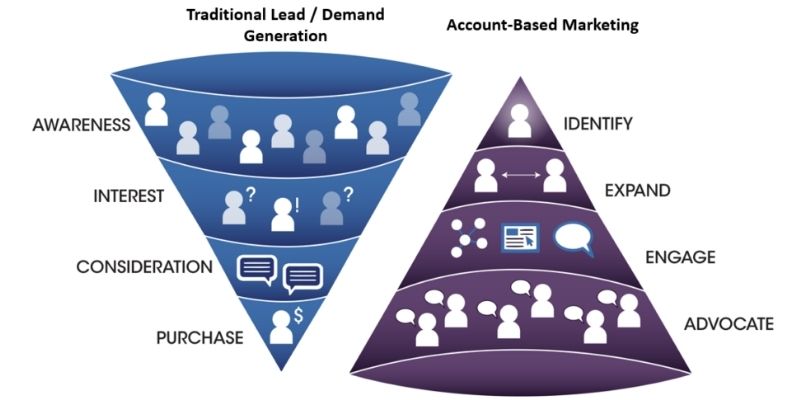
At its core, Account-Based Marketing is a focused growth strategy in which marketing and sales teams collaborate to create personalized buying experiences for a mutually identified set of high-value accounts. Unlike traditional inbound methods that prioritize volume, ABM treats each target account as its own unique market. This fundamental shift in mindset allows businesses to allocate budget more efficiently, reduce wasted impressions, and build deeper relationships with prospects who genuinely match their ideal customer profile.
The three core ABM models
There are three widely recognized models within Account-Based Marketing: one-to-one, one-to-few, and one-to-many. Each model varies in the level of personalization and the number of target accounts it addresses, allowing organizations to scale their efforts based on available resources and strategic priorities.
Aligning sales and marketing teams
One of the foundational pillars of successful Account-Based Marketing is tight alignment between sales and marketing. When both teams share the same account list, messaging framework, and success metrics, campaigns become significantly more cohesive. This alignment eliminates the friction that often exists between departments, ensuring that every touchpoint — from the first ad impression to the final sales call — tells a consistent and compelling story.
Identifying the ideal customer profile
Before launching any ABM initiative, organizations must define a precise ideal customer profile, or ICP. This involves analyzing firmographic data, technographic signals, and historical win/loss patterns to identify the accounts most likely to convert and retain. A well-defined ICP is the compass that guides every targeting, content, and channel decision within the broader Account-Based Marketing framework.
Key components that make Account-Based Marketing campaigns successful
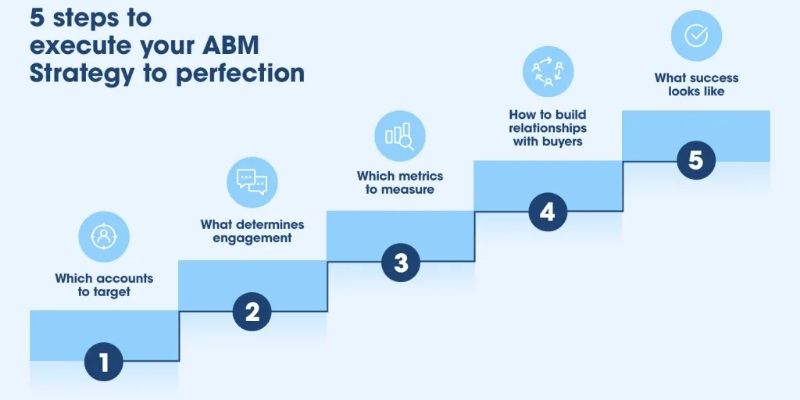
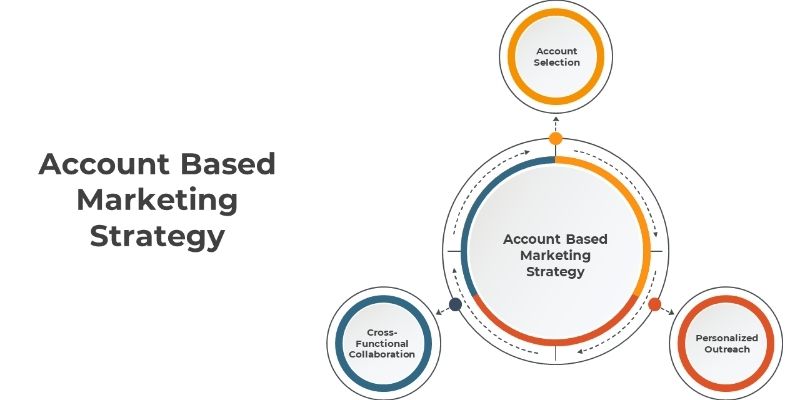
Executing an effective Account-Based Marketing program requires more than simply choosing a list of target accounts. It demands a carefully orchestrated combination of data intelligence, personalized content, multi-channel engagement, and continuous measurement. Each of these components plays a distinct role in moving target accounts through the buying journey, and neglecting any one of them can significantly reduce overall campaign effectiveness. Teams that invest in building these foundational elements tend to see faster adoption and stronger results.
Data is the lifeblood of any ABM strategy. Intent data, in particular, allows marketers to identify accounts that are actively researching solutions similar to theirs, enabling timely and relevant outreach. Platforms like Bombora, 6sense, and Demandbase aggregate behavioral signals from across the web to surface in-market accounts before they ever raise their hand. When layered on top of a solid ICP, intent data gives Account-Based Marketing teams a significant competitive advantage in prioritizing outreach and personalizing messaging at scale. You can explore how agencies like ADVENTURE MEDIA apply these principles to drive measurable outcomes for B2B clients.
A comparison of ABM models and their strategic applications
Choosing the right ABM model depends on your company’s resources, sales cycle complexity, and the size of your target account list. The table below provides a structured overview of how each model differs in terms of personalization depth, account volume, and typical use cases, helping teams make more informed strategic decisions when designing their Account-Based Marketing programs.
| ABM model | Personalization level | Number of accounts | Best suited for | Resource requirement |
| One-to-one (Strategic ABM) | Extremely high | 1–10 accounts | Enterprise deals, key named accounts | Very high |
| One-to-few (ABM Lite) | High | 10–50 accounts | Mid-market clusters with shared pain points | Moderate to high |
| One-to-many (Programmatic ABM) | Moderate | 50–1,000+ accounts | Scaling personalization with automation | Moderate |
Measuring performance and optimizing your Account-Based Marketing strategy
Traditional marketing metrics like click-through rates and form fills are insufficient for evaluating the true impact of Account-Based Marketing. ABM requires a different measurement framework — one that focuses on account engagement scores, pipeline influence, deal velocity, and expansion revenue. Tracking these metrics over time allows teams to understand which accounts are progressing through the funnel, which content assets are resonating, and where gaps in the buying journey need to be addressed.
Account engagement scoring
Engagement scoring in Account-Based Marketing aggregates behavioral signals — such as website visits, content downloads, webinar attendance, and email interactions — into a single score that reflects an account’s overall interest level. This score helps sales teams prioritize outreach and ensures that the most engaged accounts receive timely, relevant follow-up before interest wanes.
Pipeline and revenue attribution
Attributing pipeline and closed revenue to specific ABM activities is critical for justifying investment and scaling the program. Multi-touch attribution models help teams understand which channels and content pieces contributed most to moving an account through the funnel. This data-driven approach ensures that Account-Based Marketing budgets are allocated to the tactics delivering the highest return on investment.
Iterating based on account feedback
Sales conversations with target accounts provide invaluable qualitative data that complements quantitative engagement metrics. Regularly debriefing with sales reps about objections, questions, and content gaps allows Account-Based Marketing teams to refine their messaging, develop new assets, and better anticipate the needs of similar accounts in the pipeline.
Conclusion
Account-Based Marketing represents a fundamental evolution in how B2B companies approach growth — shifting from volume-based tactics to precision-driven, relationship-focused strategies. When executed with the right data, aligned teams, and a commitment to continuous optimization, ABM consistently delivers superior pipeline quality and revenue outcomes. Whether you are just beginning to explore ABM or looking to mature an existing program, the principles outlined in this guide provide a solid foundation for building a strategy that scales with your business ambitions.